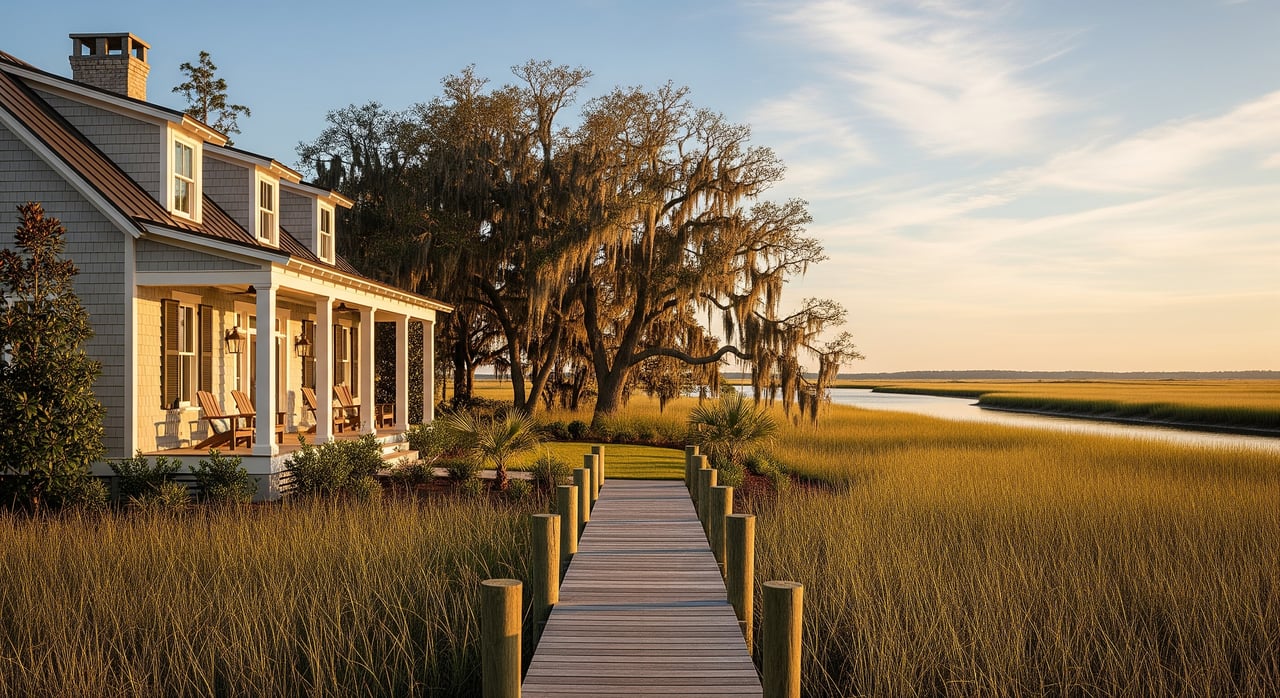
Lowcountry Architectural Styles in Palmetto Bluff
December 18, 2025
December 18, 2025
Imagine easing into the evening on a wide, shaded porch while the breeze moves through the marsh grass and the light fades over the May River. If you are drawn to that feeling, the Lowcountry architecture in Palmetto Bluff was designed for you. This guide unpacks the hallmark design elements you will see here, why they matter in our coastal climate, and how to match them with the way you want to live. You will also find practical checklists to help you evaluate homes with confidence. Let’s dive in.
Palmetto Bluff sits in South Carolina’s Lowcountry, where hot, humid summers and mild winters shape how homes are built. Traditional responses to this climate include elevated foundations, broad porches for shade, and layouts that invite cross-breezes. These aren’t just stylistic touches. They make day-to-day living more comfortable and resilient.
The region’s architectural language draws from coastal cottages and formal antebellum influences. You will notice tall ceilings, piazzas, and simple, raised forms that suit marsh and riverfront settings. African, Caribbean, and European building practices also shaped materials and floor plans that work with tidal landscapes.
In Palmetto Bluff, this heritage is curated through community design guidelines. Architectural review helps ensure rooflines, materials, porches, and landscaping feel true to place while integrating modern systems and amenities. The result is a consistent, timeless streetscape that still lets each home feel unique.
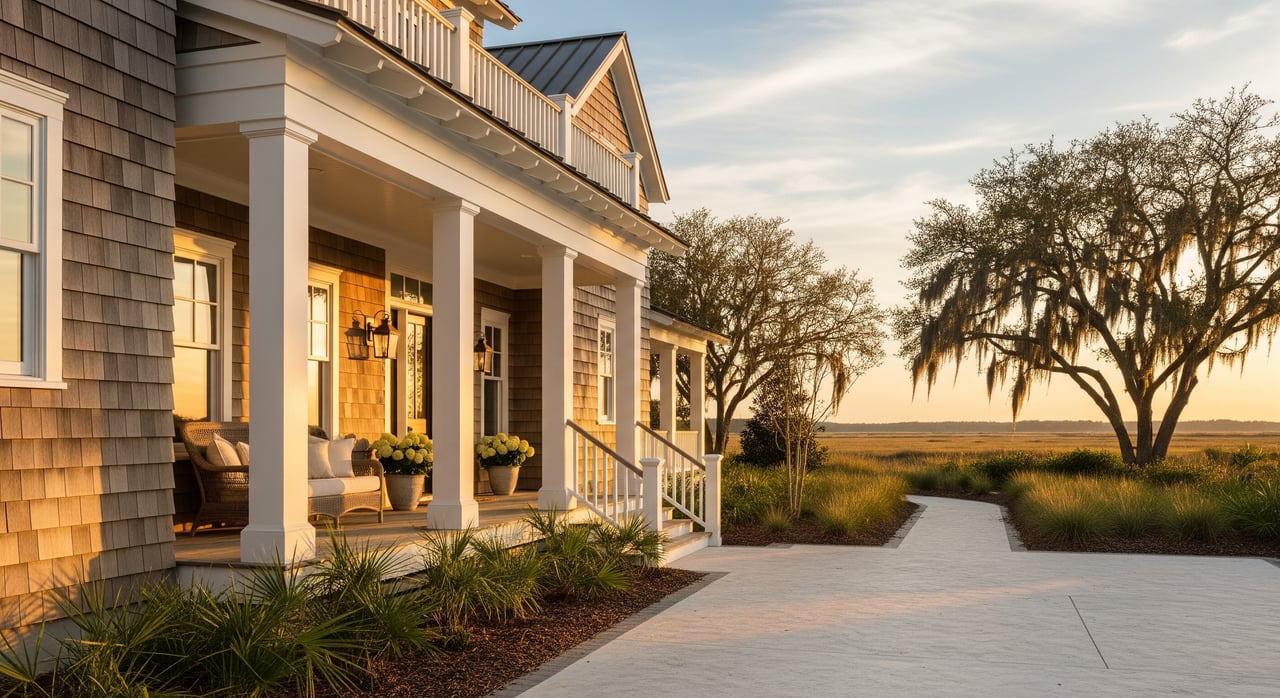
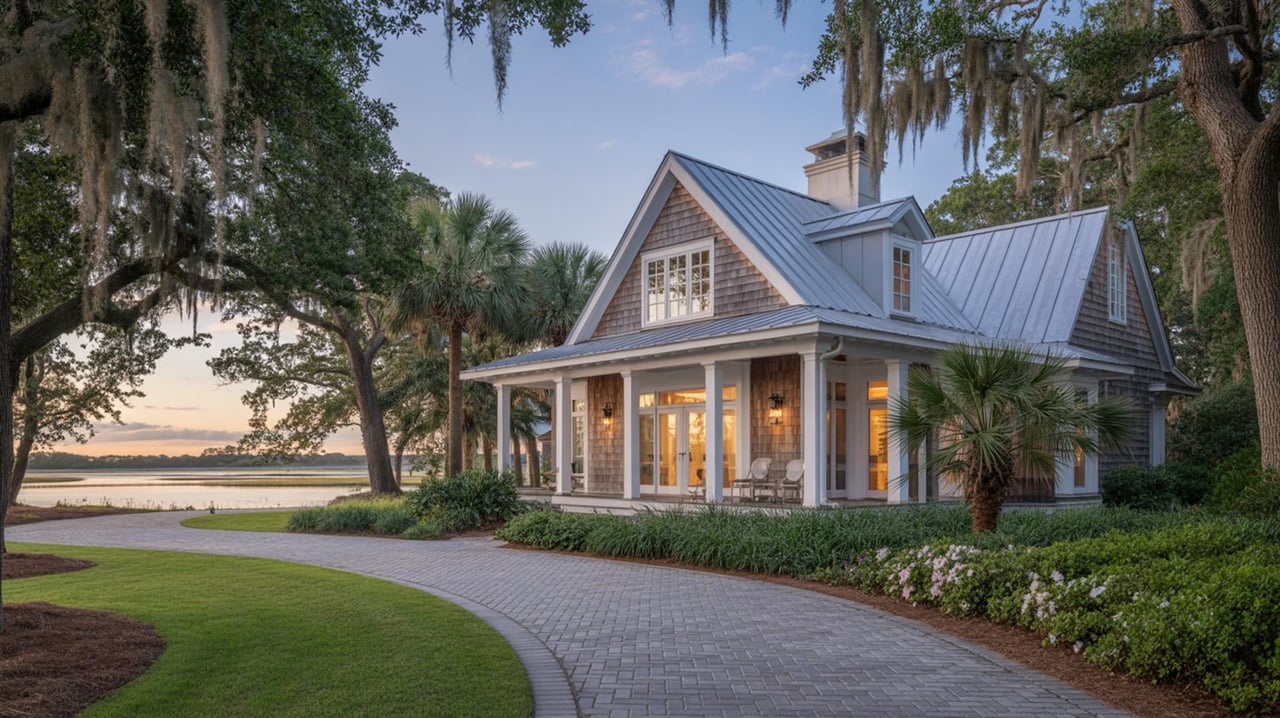
Porches are the soul of Lowcountry living. They extend your living space outdoors, create shade, and help cool interiors by encouraging breezes. In Palmetto Bluff, you will see full-width front porches, wraparounds, and even two-story piazzas set up as true rooms.
Typical details include beadboard ceilings, wide columns, ceiling fans, and hanging lanterns. Historically, rot-resistant woods like cypress and heart pine were favored. Today, many homes use composite decking for a low-maintenance look that can handle salt air and humidity.
Screened porches and outdoor kitchens are especially popular because they maximize usable days and enhance rental appeal where permitted. A deep, furnished porch supports the lifestyle many buyers are seeking.
Tabby is a historic coastal concrete made from lime, sand, water, and crushed oyster shells. You will find it in foundations and chimneys of older Lowcountry structures. In new construction, authentic tabby is rare, but tabby-inspired stuccos and textured finishes are often used to honor regional character.
Understanding whether a home features historic tabby or tabby-like finishes matters. Genuine historic material may bring preservation considerations. Tabby-inspired treatments deliver the look without those obligations.
Standing seam metal roofs are a Lowcountry staple for good reason. When properly specified and installed, they offer strong wind resistance, corrosion protection, and long service life. Their reflective qualities can also reduce heat gain, and the sleek profile nods to the region’s working waterfront heritage.
Common materials include coated steel, aluminum, and sometimes copper for a statement look. In coastal settings, corrosion-resistant fasteners, sound roof-to-wall connections, and professional flashing make all the difference in performance.
In Palmetto Bluff, the line between inside and out is designed to disappear. Tall windows, French or folding doors, and continuous floor levels create seamless transitions to porches and terraces. High ceilings allow warm air to rise, deep overhangs temper the sun, and operable windows invite cross-ventilation.
Modern homes layer performance into this openness. You will see storm-rated doors and windows, integrated insect screens, and HVAC systems tuned for humidity control. The goal is to keep the breezy feel while performing well during storms and peak heat.
Because Palmetto Bluff includes marsh and riverfront settings, you will see many homes raised on pilings or pier-and-beam foundations. Elevation helps limit flood risk, improves underfloor ventilation, and supports coastal construction best practices.
Designers often incorporate open undercroft spaces or breakaway panels on water-facing lots. Structural connections are engineered for hurricane loads, and you may notice reinforced pilings and carefully detailed stairs and entries.
Beyond metal roofs, exterior palettes lean classic coastal. Painted fiber-cement clapboards, wood shingles, stucco, and masonry accents are common. Light colors reflect heat and complement the landscape. Operable louvered shutters can add storm protection and controlled ventilation, while wide trim and simple cornices reinforce proportion and scale.
When comparing homes, weigh beauty against upkeep. In a humid, salty environment, durable materials and quality paint systems pay off in fewer touch-ups and a sharper look over time.
Landscapes tie houses to place as much as architecture. Native plantings like live oaks, sabal palmettos, magnolia, and salt-tolerant grasses stand up to coastal conditions and visually root homes in the Lowcountry. Elevated boardwalks to docks, privacy buffers, and setbacks protect marsh ecology and preserve sightlines.
Hardscape choices continue the theme. Crushed-shell drives and oyster-shell-inspired pavers echo historic materials and feel right underfoot. On a quiet morning, you will notice how the light filters across porch boards, how boat wakes soften against the riverbank, and how the scent of live oak and salt air completes the experience.
Different homes express the Lowcountry language in distinct ways. Marsh cottages and village homes typically have smaller footprints, prominent porches, and close proximity to trails and amenities. They appeal to buyers seeking lock-and-leave simplicity.
Riverfront estates often pair formal architecture with rustic detailing, large piazzas, and expansive outdoor rooms that frame water views. They can require more maintenance but deliver memorable spaces and strong resale appeal. Carriage houses and guest cottages are common and mirror the main home’s materials, offering flexible space for guests or potential rental configurations where allowed.
Community covenants and design review shape what you can change and build. If you plan to add a screened porch, outdoor kitchen, or solar panels, review CCRs and architectural guidelines early so your wish list aligns with what is permitted.
Coastal beauty comes with practical demands. Salt air and humidity accelerate corrosion, wood rot, mold, and paint wear. Plan for regular exterior maintenance, including repainting cycles, gutter cleaning, and periodic checks on metal roofs and fasteners. Termite risk is higher in this climate, so treated materials, naturally resistant woods, and routine inspections are standard.
Comfort systems matter. Efficient HVAC with dehumidification keeps interiors healthy and helps preserve finishes. Screened porches extend your outdoor season, and sensible storm prep features like hurricane straps, shuttering systems, and impact-rated windows can reduce damage and may help with insurance.
Seasonality plays a role, too. Summers are vibrant for outdoor living, while October through April delivers gentle weather that makes porches and terraces especially inviting. With proper insulation and heating, homes are comfortable year-round.
In a curated place like Palmetto Bluff, genuine details hold value. Authentic cues include raised foundations, deep porches sized for real furniture, operable shutters, and plantings that suit the coastal setting. Materials chosen for longevity in salt air signal thoughtful construction.
Be cautious with purely decorative touches. Applied shutters that do not operate, shallow “porches” that cannot be used, or non-durable materials that only mimic a look can disappoint over time. Prioritizing substance over surface preserves both enjoyment and resale.
Finding the right Palmetto Bluff home is about more than square footage. It is about how the porch catches morning light, how the breeze moves through your rooms, and how materials will age gracefully in the Lowcountry. With decades of local tenure and a hospitality-informed approach, Krista pairs design insight with practical guidance on maintenance, insurance, and community review so you can buy with confidence. Ready to explore homes that fit your lifestyle and investment goals? Schedule a Private Lowcountry Consultation with Krista Wilson.
Stay up to date on the latest real estate trends.
Real Estate
Essential Smart Home Upgrades for Berkeley Hall Residents
Real Estate
Enhancing Property Worth Through Sunlight
Real Estate
Essential Tips for Navigating the Wexford Plantation Real Estate Market
Real Estate
Essential Inquiries for a Successful Home Tour in Sea Pines Plantation
My family and I relocated here originally in 1976. Together we will have fun and place you love to call home.